
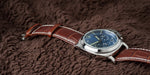

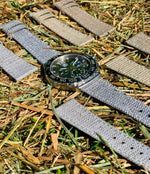


The early years of aviation were characterized by a thirst for adventure, daring—and perhaps even a weariness of life . The brothers Orville and Wilbur Wright were the first people to fly in powered aircraft in 1903. Perhaps even more famous, Charles Lindbergh was the first to fly solo across the Atlantic in 1927.
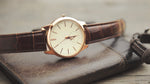
Even in the earliest years of flight, one gadget was always with them: the pilot's watch . It was originally developed to enable pilots to measure time precisely and capture important flight information at a glance. This is precisely why these watches feature a particularly large, easy-to-read dial that is easy to see even in poor lighting conditions. The dial's luminosity is also more pronounced than that of other watches.
In the past, pilot's watches were essential instruments for pilots to perform navigational calculations and accurately measure flight time. Even today, they remain a symbol of precision and reliability, appreciated by both professional pilots and watch enthusiasts around the globe.
What are pilot watches good for? Pilot watches are known for their high functionality and reliability. They provide pilots with precise timekeeping, which is essential for navigation and flight planning. The large, easy-to-read dials and high luminosity allow for quick reading even in poor lighting conditions. The stopwatch function helps measure precise time intervals.
The history of pilot's watches
The aforementioned Orville and Wilbur Wright, as well as other aviation pioneers, were exposed to extreme conditions . They ventured into the skies in rickety aircraft, completely devoid of the electronic instruments we take for granted today. The cockpits were usually open. Wind and weather lashed the pilots' faces. Strong vibrations and changing light conditions made life even more difficult.
Conventional pocket watches were impractical and difficult to read in this environment . Pilots needed a solution that would allow them to read the time quickly and accurately without taking their hands off the controls.
The development of the first pilot's watches for men began with Louis Cartier and Hans Wilsdorf . In 1904, Louis Cartier designed the Santos for Brazilian pilot Alberto Santos-Dumont, one of the first wristwatches specifically designed for pilots. At the same time, Hans Wilsdorf founded the Rolex brand, which, with its precise and robust wristwatches, remains one of the most sought-after watch brands to this day.
Aviation as a means of transportation became established during the 1920s and 1930s at the latest. During World War II, pilot's watches played a crucial role in military aviation . Pilot's watches such as the German B-Uhr (observation watch) and the British RAF 6B/159 were developed specifically for military use. The first automatic pilot's watches also came onto the market during this period.
The war significantly influenced the development of pilot's watches . The need to be able to measure time precisely even under adverse conditions led to technical innovations such as anti-magnetic cases and improved luminous materials.
After World War II, pilot's watches experienced a heyday and gained immense popularity – not only among pilots, but also among watch enthusiasts and adventurers. People not only wanted to celebrate their heroes who averted the Nazi threat, but also appreciated the features that made pilot's watches special.
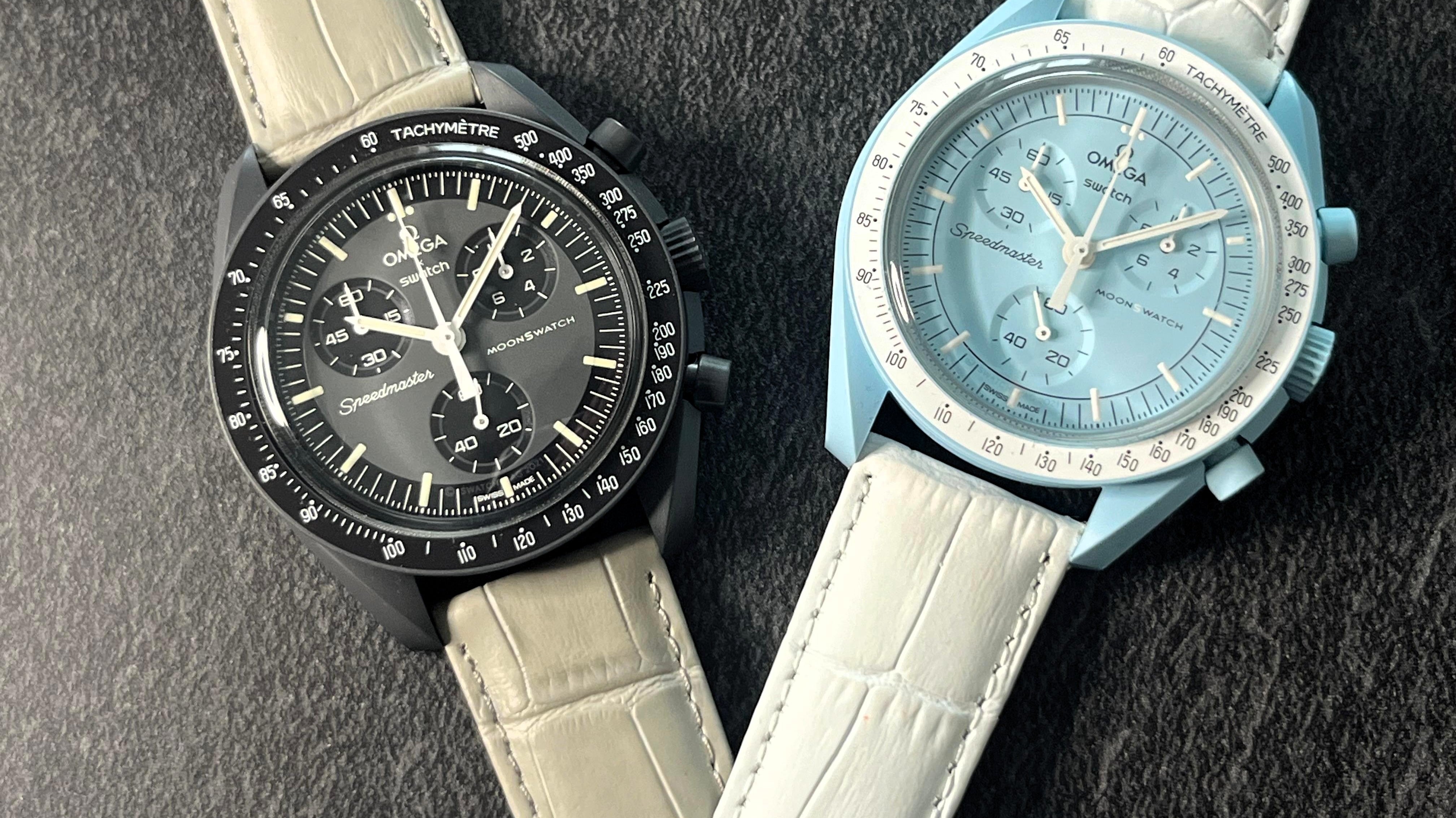
Brands like Breitling, with its famous Navitimer model, and Omega, with the Speedmaster, set new standards in watchmaking . These models not only offered the typical features of pilot's watches, such as a large dial and high luminosity, but also looked good.
Later, further innovations were added:
- Automatic winding mechanisms increased user-friendliness by eliminating the need for manual winding.
- Improved water resistance and shock resistance made the watches more resistant to the natural elements.
- Anti-magnetic properties and tempered glass contributed to durability and accuracy.
Functionality of pilot watches
Their special functions have made pilot's watches an indispensable part of every pilot's equipment throughout history . They also quickly established themselves in the fashion world.
Examples of some of the most important features of pilot watches are the following:
|
feature |
Advantage |
Models |
|
Large dial |
Easy and precise readability |
IWC Mark XI, Breitling Navitimer |
|
Stop function |
Accurate measurement of time intervals |
Omega Speedmaster, Longines Aviation BigEye |
|
Tachymeter scale |
Calculating speeds |
Breitling Navitimer, Seiko Flightmaster |
|
Date display |
Overview of the current date |
Rolex GMT Master II, Zenith Pilot |
|
Anti-magnetic housing |
Protection against magnetic fields for precise timekeeping |
IWC Pilot's Watch, Omega Seamaster |
|
Luminous hands |
Good readability in poor lighting conditions |
Luminox Pilot Watch, Sinn 104 St Sa A |
Style and design of pilot watches
Pilot's watches combine functional elements with timeless elegance – and that's exactly what makes them so special.
A clean, minimalist dial is characteristic of these watches. The easily legible numbers and markers are large and clear, often coated with luminous material to ensure readability even in low-light conditions. The robust case protects the watch from extreme conditions and underscores its durability.
These design elements are not only aesthetically pleasing but also functional . The clear dial allows pilots to read the time quickly and accurately, which is especially important in stressful situations. The legible numbers and markers help ensure the watch can be read reliably even in turbulence or in the dark. The robust case ensures that the watch can withstand the harsh conditions of aviation.
Its simple yet striking design complements both formal and casual outfits, making it versatile. So, you don't have to be a pilot to wear a pilot's watch—even as an entrepreneur or CEO, you can look stylish with one.

Pilot watches today: more than just timepieces
Pilot's watches have undergone a true evolution since their creation in the early years of modern aviation. While some of the original characteristics, such as the large dial and robust construction , have remained, several new features have been added. Stopwatch functions, luminous dials, and features like a tachymeter were not yet common more than a hundred years ago.
For many people today, pilot's watches are also an expression of status and style . Their connection to aviation history and their association with adventure and precision give them a special charm. Pilot's watch brands such as Breitling, IWC, and Omega have developed models that impress not only with their functionality but also with their aesthetic appeal.
Another factor that certainly contributes to the popularity of pilot's watches is the fact that some models are worn by celebrities – and the Omega Speedmaster even went to the moon during the Apollo missions .
Some of the most stylish pilot watches of all time are the following:
|
brand |
Model |
Functions |
publication |
Price in € approx. |
Price trend |
|
Breitling |
Navitimer |
Chronograph, tachymeter, luminous numerals |
1952 |
6,500 |
Increasing |
|
IWC |
Big Pilot's Watch |
Large crown, power reserve indicator, luminous numerals |
2002 |
11,500 |
Increasing |
|
omega |
Speedmaster Moonwatch |
Chronograph, tachymeter, luminous numerals |
1957 |
5,500 |
Increasing |
|
Rolex |
GMT-Master II |
Dual Timezone, date display, luminous numerals |
1982 |
12,000 |
Increasing |
|
Zenith |
Pilot Type 20 Extra Special |
luminous numerals, large dial, vintage design |
2012 |
6,000 |
Increasing |
|
Laco |
Pilot's watches B-Uhr |
Historical design, luminous numerals, large dial |
1940s |
1,500 |
Increasing |
|
sense |
104 St Sa A |
Date display, chronograph, luminous numerals |
2013 |
1,500 |
Increasing |
|
Longines |
Navigation BigEye |
Chronograph, luminous numerals, vintage design |
2017 |
2,500 |
Increasing |
|
Seiko |
Flightmaster |
Chronograph, tachymeter, luminous numerals |
1990s |
500 |
Luminox |
|
Luminox |
Pilot Watch |
Luminous digits, robust case |
1994 |
450 |
Increasing |
Conclusion
There's a reason why pilot watches are so popular. The diverse features that are useful in many situations and for many professions , the history behind the development of these watches, and the stars who sport them all contribute to the popularity of pilot watches.
Pilot's watches from renowned luxury watch brands like Rolex, Omega, IWC, or Longines are excellent investments. As you can see in the table above, the prices of such watches continue to rise. So, if you're looking for a safe investment, one of these models is a good choice.
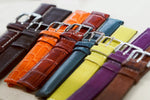
Alternatively, you can also buy a pilot's watch to enhance your outfits —because in addition to their functional advantages, such watches also offer a rarely seen aesthetic. This is especially true when paired with a matching watch strap, which you can find in our shop .
FAQ
What are the most important features of a pilot's watch?
Pilot's watches are characterized by a large, easy-to-read dial, luminous hands and markers, a stopwatch function, and a robust, anti-magnetic case.
What advantages do pilot watches offer over other watches?
Pilot's watches offer excellent readability, high precision, robustness and special functions such as the stopwatch, which work reliably in extreme conditions.
What famous pilot watches are there?
Famous pilot's watches include the Breitling Navitimer, the IWC Mark XI and the Omega Speedmaster, all of which are known for their reliability and precision.