









Join us on a fascinating journey through the history of timekeeping, from its earliest beginnings in ancient civilizations to today's modern wristwatches .
We begin our journey through time in early antiquity, when time was still roughly determined by the position of the sun and stars. Gradually, this measurement transformed into orderly calendar structures.
It was not until the 15th century, when the first portable clocks appeared, that the first steps towards our modern timekeeping began, which would change our lives forever.
From the first sundials in ancient Egypt to sophisticated mechanical clocks in Greece to the groundbreaking invention of the watch strap by Louis Cartier, this development is far more interesting than you might think and has laid the foundations for our modern wristwatches today :
- 3000 BC - Egypt: Time was measured based on the position of the sun. The first sundials were developed.
- 1500 BC - Egypt: Water clocks, called clepsydras, were used to determine time by measuring the flow of water.
- 500 BC - Greece: The first simple mechanical clocks were invented. These models were based on a flow mechanism.
- 1300 - Europe: The first large mechanical clocks that struck on the hour were installed in churches and public buildings.
- 1500 - Italy: The pocket watch was invented in Europe. It was powered by a spring.
- 1656 - Netherlands: Christiaan Huygens developed the pendulum clock, which significantly increased the accuracy of mechanical clocks.
- 1675 - England: The balance spring was invented by Robert Hooke. This made the production of smaller, more accurate pocket watches possible.
- 1761 - England: John Harrison demonstrated the accuracy of his marine chronometers, which helped solve the longitude problem.
- 1812 - Switzerland: Abraham-Louis Breguet created the first ladies' wristwatch made specifically for women.
- 1868 - Switzerland: Patek Philippe set a milestone and produced the first portable wristwatch for Count Koscowicz - a groundbreaking development that paved the way for the modern wristwatch.
- 1904 - France: Louis Cartier developed the first wristwatch for men for the aviator Alberto Santos-Dumont de Santos.
The birth of the wristwatch
The beginnings of the wristwatch were technologically impressive. It required both technical understanding and skill, as well as the courage to embrace change, to miniaturize the movement while simultaneously ensuring it functioned precisely and reliably.
The wristwatch was born in 1868, when Patek Philippe developed the first portable watch for Count Koscowicz. What made it so special? It could be worn on the wrist, which was quite unusual at the time compared to conventional pocket watches.
Early models were true works of art, as a wristwatch was far more than a mere timepiece. Artfully decorated, these watches were a status symbol for members of high society, as not everyone could afford a wristwatch. These special watches were reserved for wealthy ladies and gentlemen and were an expression of their social status.
In 1904, Louis Cartier revolutionized the world of watches with the introduction of the Cartier Santos. A watch specifically designed for practical use in flight and manufactured specifically for the aviator Alberto Santos-Dumont. This watch was not only functional but also contributed to wristwatches gaining significantly more attention, especially among men.
A turning point in the history of the wristwatch was the introduction of the first waterproof wristwatch, the Rolex Oyster, developed by Hans Wilsdorf in 1923. This watch marked a groundbreaking technological advance. With its ability to prevent water from penetrating the case, the Rolex Oyster opened up entirely new possibilities for adventurers and athletes.
Gradually, wristwatches became an integral part of everyday life and developed into an indispensable accessory. Rolex established itself as a leading brand in the watch industry this year and, as a well-known and renowned manufacturer, continues to set standards for quality and precision.
Wartime: The Second World War and the Democratization of Timekeeping
World War II served as a catalyst for the widespread adoption of wristwatches as standard equipment among soldiers. Synchronized timekeeping was essential for military tactical operations and led to the establishment of wristwatches as part of the equipment.
The war drove technical advances in watchmaking. Demand for precise and robust watches increased, and the technical features of the models became more sophisticated. To withstand the harsh conditions of wartime operations, shock-resistant, fully waterproof, and exceptionally reliable watch movements were developed.
The war's far-reaching impact on society's perception of wristwatches was lasting. The new, modern wristwatches increased demand even outside of the war effort, and the advantages of mobile, precise timekeeping increasingly came into public focus.
Wristwatches were no longer seen as just an accessory, but as a helpful and practical tool for everyday life.
The Quartz Revolution: A Turning Point in Watch History
The advent of quartz technology was truly revolutionary. Unlike previously known clockworks, quartz watches utilize the vibrations of a quartz crystal to measure time, enabling previously unimaginable accuracy compared to mechanical watches and having a revolutionary impact on the traditional watch industry.
The introduction of quartz watches fundamentally changed the global watch market. Not only was the more accurate timekeeping a plus, but the new technology also made wristwatches significantly more cost-effective to manufacture. More established technologies like mechanical movements faded into the background.
Wristwatches became increasingly popular. The watch industry responded to this development in different ways. While a few established manufacturers began to respond to the changing market and include quartz watches in their product range, others remained true to classic mechanical watchmaking, specializing in high-quality, handcrafted models.
However, the quartz revolution gradually affected the entire industry, forcing manufacturers to adapt and find innovative ways to remain competitive and meet consumer needs.
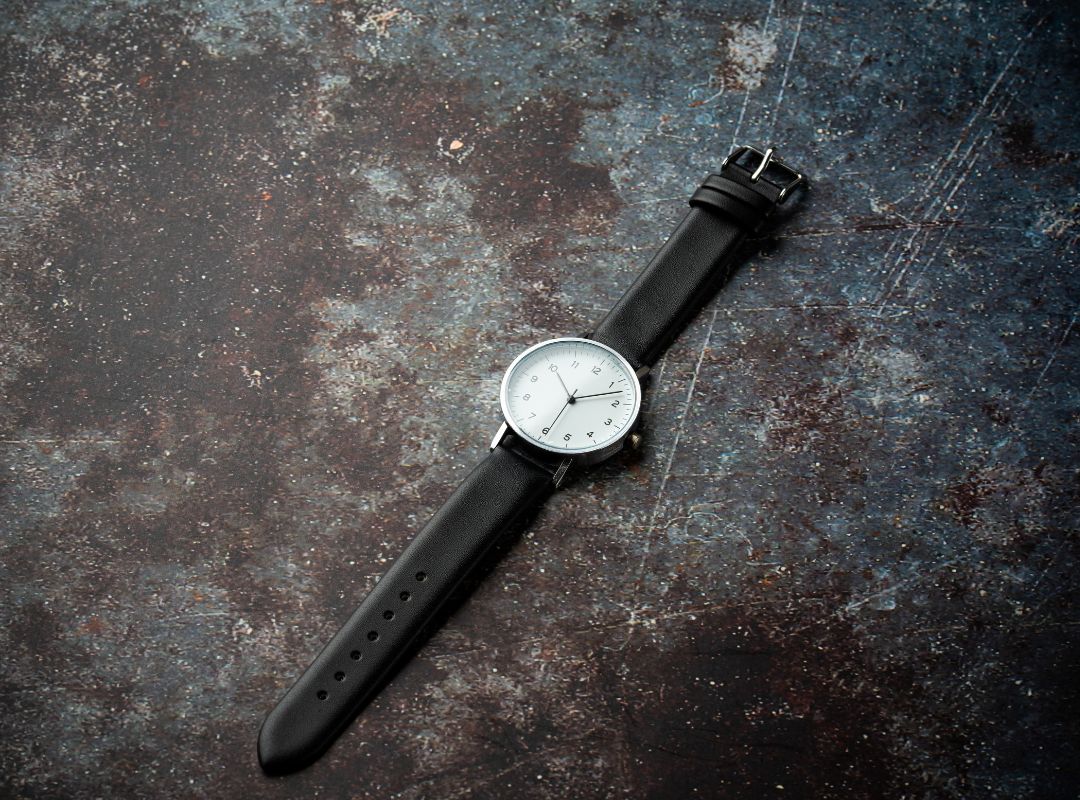
Wristwatches in the 21st century: More than just timepieces
To this day, the watch market continues to evolve. This progress goes hand in hand with the integration of smartwatch functions and other technological innovations.
Smartwatches are particularly popular in today's watch market. They offer a wealth of features such as notifications, fitness tracking, and the ability to answer calls, receive emails, and connect with your social network on the go.
But even beyond technologically advanced smartwatches, wristwatches no longer serve merely to tell the time. Wristwatches are now a fashion accessory, a status symbol, and reflect the personal style of their wearers.
And we can expect far-reaching revolutions in the future as well. It can be assumed that tradition and design will merge even more deeply with technological innovations in the future.
Possible developments here could include additional health and fitness features. Expanded connectivity or integration with artificial intelligence are also expected.
Material and design: The evolution of the watch strap
The variety of materials and design options for watch straps has evolved significantly over time. Traditional leather , modern plastics, and materials like ceramic and rubber reflect their wearers' search for durability, comfort, and aesthetic diversity.
The design of wristwatches has continuously evolved as a reflection of social trends and has gone hand in hand with the development of sophisticated materials.
From the simple and functional designs of the industrial age to the minimalist or technologically inspired styles of the 21st century, watches reflect the spirit and taste of each era.
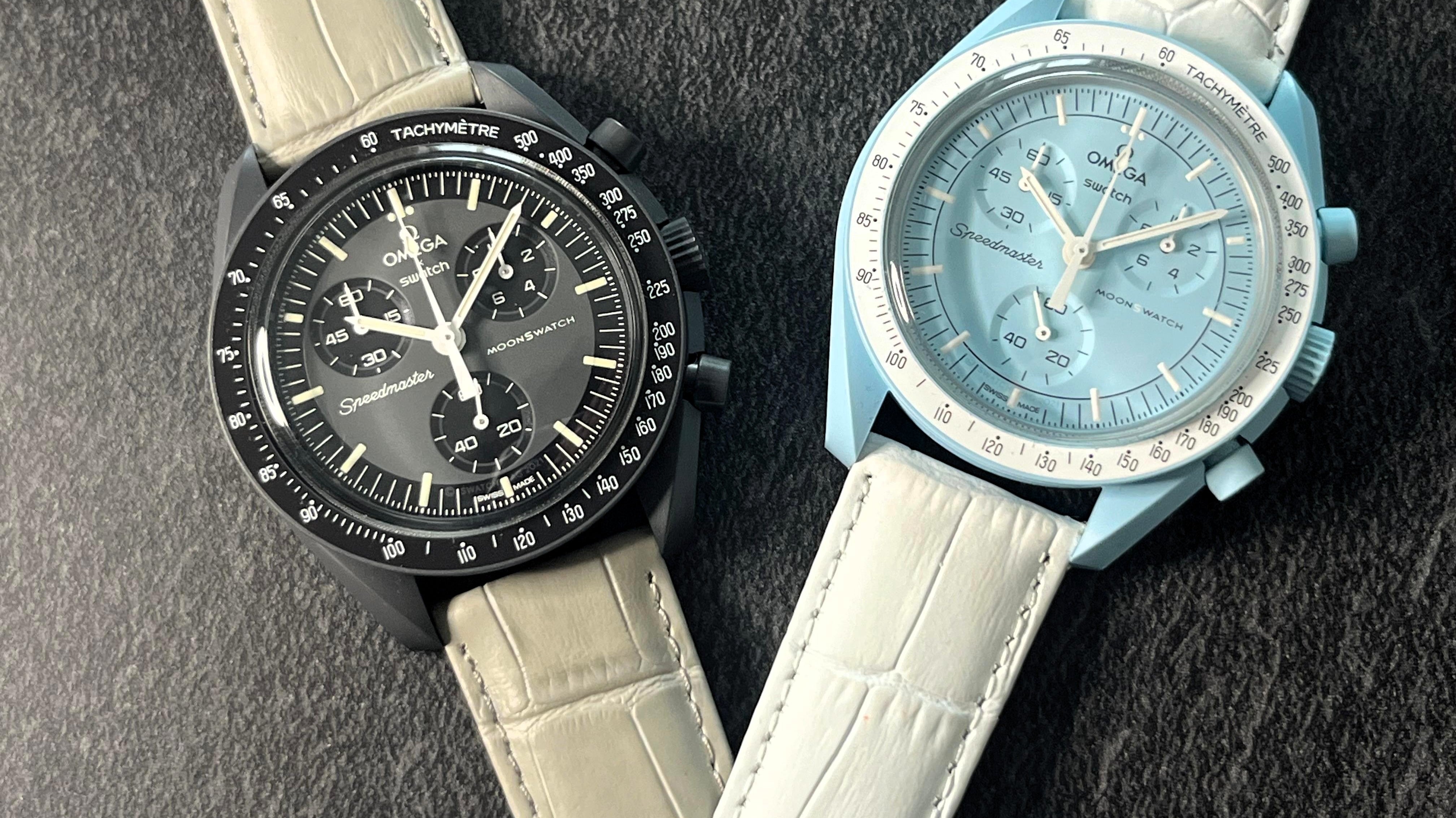
Certain watch models and designers have significantly shaped the appearance of wristwatches . Innovative manufacturers such as TAG Heuer, Cartier, and Glashütte, as well as iconic models such as the Rolex Submariner and the Omega Speedmaster, set technical standards and defined entirely new design directions for watches and watch straps.
Brave designers like Gerald Genta also had a significant influence on the design of wristwatches with their creative designs .
Conclusion: The enduring importance of the wristwatch
From its humble beginnings to the present day, the history of the wristwatch has been characterized by innovation, style, and technical sophistication. It's hard to believe that simple sundials of antiquity laid the foundation for the development of state-of-the-art smartwatches, functional sports watches, and sophisticated designer wristwatches.
The history of today's wristwatch began in the late 19th century, when Patek Philippe created the first wristwatch in 1868. Brave manufacturers like Rolex and Omega popularized the timepieces in the 1900s with new, advanced models.
Driven by World War II, the first affordable quartz watches were industrialized. Mass production made watches significantly cheaper to manufacture.
And even in our increasingly digitalized world, the wristwatch retains its significance as an indispensable accessory. High-quality watches are still considered a symbol of style and underscore the personal taste of their wearers.
Thanks to its versatility, a stylish wristwatch remains a timeless companion for people all over the world.
Looking ahead, future smartwatches will continue to expand their influence on the market. Pioneers like Apple and Samsung will surely further develop existing technologies and designs.
But sustainability will also continue to be a focus, driving forward the development of environmentally friendly yet functional materials, such as those you can already find in Happystrapy's online shop .
FAQs
How long have wristwatches existed?
The history of timekeeping dates back to 3000 BC in ancient Egypt, when time was first measured based on the position of the sun. The first portable wristwatch was developed in the late 19th and early 20th centuries.
Who built the first wristwatch?
The first known wristwatch was produced by Patek Philippe for Count Koscowicz in 1868. This model is considered the first portable watch designed specifically for wearing on the wrist.
What was the first commercial wristwatch?
The first commercial model was the Santos wristwatch. It was designed in 1904 by Louis Cartier for the Brazilian pilot Alberto Santos-Dumont. It is still considered one of the earliest commercial successes of portable watches.