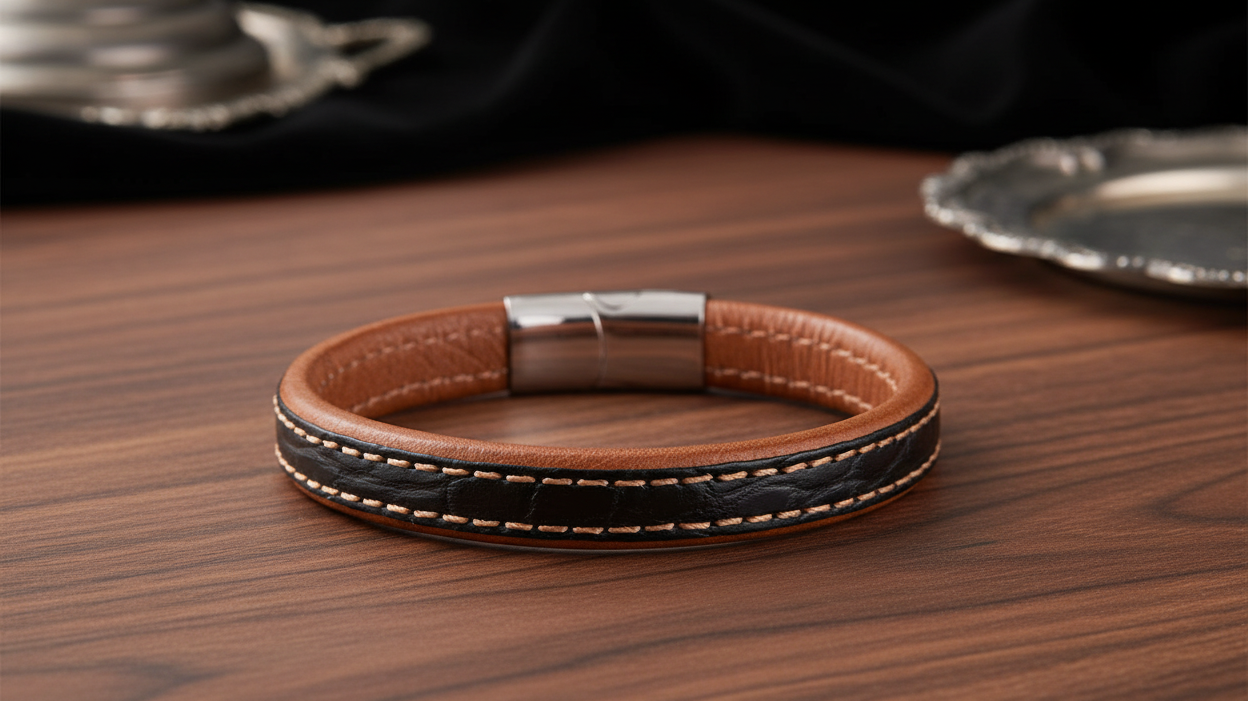

Leather has been highly valued in numerous industries for centuries . It's used in furniture manufacturing, the fashion industry, and the automotive sector alike – and there's good reason for that. Its unique combination of durability, flexibility, and charm makes leather an indispensable component of many high-quality products.
In this blog post, we'll explore the special properties of leather , show you where it's used, and explain why it's also an excellent choice for watch straps. We'll cover the different types of leather, explain the care and maintenance of this precious material, and take a look at the sustainability of leather production.
What distinguishes leather as a material? Leather is primarily characterized by its long-lasting durability, exceptional flexibility, and natural beauty. It is water-resistant, breathable, and adapts to the wearer's shape over time, making it particularly comfortable. Leather ages gracefully and acquires character over time. This makes it ideal for high-quality products such as watch straps, furniture, and clothing. Furthermore, leather is easy to maintain and, with proper care, can last for many years.
Discover why leather is such a valuable material and the benefits it offers – not just for your watch, but for many aspects of everyday life.
What are the main characteristics of leather?
Leather is a fascinating material that has been valued in various industries for centuries. But what exactly makes leather so special ? We'll show you in the following chapter.
What makes leather so durable?
Leather is naturally extremely resilient and durable . It owes these properties in particular to its dense fiber structure, which protects it from wear. However, the manufacturing process also plays a crucial role. Although we'll discuss the manufacturing process in more detail later, here's a brief overview:
- Selection of rawhide: Only the best hides are used for high-quality leather.
- Tanning: This process makes the skin durable and resistant to decay.
- Dyeing and finishing: Here the leather is dyed and given a protective layer that makes it resistant to water and dirt.
- Finishing: In this step, the leather is brought to its final shape and quality.
Of course, the durability of leather also depends somewhat on the product it's used for. Due to the wear and tear they're subjected to on a daily basis , leather shoes generally don't last as long as, say, a leather jacket. Here are some typical products and their lifespans:
| Leather product | Typical service life |
|---|---|
| leather shoes | 10 to 20 years |
| leather jackets | 20 to 30 years |
| leather handbags | 15 to 25 years |
| leather watch straps | 5 to 10 years |
| leather sofas | 15 to 20 years |
| Leather wallets | 5 to 10 years |
| leather suitcase | 20 to 30 years |
| Leather car seats | 10 to 15 years |
What types of leather are there?
Furthermore, there are different types of leather that differ in detail. You should keep the following characteristics in mind:
- Origin and type of animal skin
- Tanning process
- Graining
- Surface treatment
- Softness and flexibility
- Strength and thickness
- Sustainability and environmental friendliness

We will show you some of the most common types of leather and briefly explain how they differ:
| Leather type | Description | Typical uses |
|---|---|---|
| Full-grain leather | Highest quality leather, entire skin layer, very durable | Shoes, furniture, bags, watch straps |
| split leather | Lower layers of the skin, less durable than full-grain leather | Clothing, upholstered furniture |
| Nubuck leather | Sanded full-grain leather, velvety surface, sensitive | Shoes, accessories, watch straps |
| Suede | Suede from the flesh side, soft and flexible | Clothing, accessories |
| artificial leather | Synthetic material, similar to leather, less durable, cheaper | Clothing, furniture, accessories |
| Aniline leather | Full-grain leather, dyed with soluble dyes, very natural | Furniture, car seats, bags |
| Semi-aniline leather | Lightly pigmented leather, less sensitive than aniline leather | Furniture, car seats, bags |
| Chrome leather | Tanned with chrome salts, very soft and flexible | Shoes, clothing, bags |
| Cowhide | Frequently used, robust and versatile | Shoes, furniture, accessories |
| Calfskin | Finer texture than cowhide, soft and supple | Clothing, accessories, shoes |
| Goat leather | Soft and flexible, durable | Gloves, clothing, bags |
| lambskin | Very soft and smooth, light and luxurious | Clothing, gloves, accessories |
| suede | Soft leather with a velvety surface | Clothing, shoes, accessories |
| Saffiano leather | Embossed leather, resistant to scratches and stains | Bags, accessories |
| Buffalo leather | Strong and durable, coarser texture | Furniture, bags, belts |
| lizard leather | Exotic leather with a unique texture | Shoes, bags, accessories |
| ostrich leather | Exotic leather with characteristic grain structure | Bags, accessories, shoes |
| crocodile leather | High-quality exotic leather, very durable | Luxury accessories, shoes, bags |
Of course, there are other types of leather , although they are much rarer – to list them all here would go beyond the scope of this article.
How is leather made?
Instead, we'd like to take a closer look at the leather manufacturing process . Leather production always begins with the tanning process, which is crucial for the quality and durability of the final product. The process is as follows:
- Soaking: The hides are soaked in water to clean and soften them.
- Dehairing and fleshing: Mechanical processes remove hair and excess flesh.
- Mordanting: The hides are treated with enzymes to prepare them for tanning.
- Tanning: This process involves transforming the hide into a durable and flexible form. There are two main methods:
- Vegetable tanning: Use of vegetable tannins, gentler on the environment, produces stronger leather.
- Chemical tanning: Use of chromium salts, faster and more efficient, produces softer leather.
Sustainable tanning methods are becoming increasingly important . Vegetable tanning, which uses natural tannins from bark and leaves, is more environmentally friendly because it uses fewer chemicals than chemical tanning, while the quality suffers little.
How is leather used in different industries?
Leather is an extremely versatile material . It is used in numerous industries, including the fashion industry, furniture construction, and watch strap production. We'll show you how leather is used in these areas.

What role does leather play in the fashion industry?
Leather is an integral part of the fashion industry —perhaps you even have a leather item in your wardrobe. Leather has been synonymous with quality and durability in fashion for centuries. Even though synthetic leather or leather substitutes, such as those made from cactus, are on the rise, traditional animal leather is still very popular.
Leather jackets, leather bags, and leather shoes are classic examples of fashion items that are timeless and always on trend. Leather is so popular because it is not only durable and hard-wearing, but also develops a distinctive patina over time – and this unique property ultimately makes each piece of leather unique. Leather also offers a high level of comfort because it adapts to the body shape and is breathable.
You can see which leather items are particularly typical in the following table:
|
Fashion items |
Typically used leather types |
Special features |
| leather jackets | Full-grain leather, nubuck leather | Robust, stylish, durable |
| leather bags | Calfskin, cowhide | Soft, flexible, durable |
| leather shoes | Cowhide, suede | Shape-retaining, comfortable |
| leather gloves | lambskin, goatskin | Smooth, flexible |
| leather belt | Buffalo leather, full-grain leather | Durable, long-lasting |
How is leather used in furniture making?
In furniture construction, leather is primarily used for upholstered furniture such as sofas, armchairs, and chairs. Leather not only lends furniture a sophisticated look but also offers numerous practical advantages:
- Comfort: Leather adapts to the shape of the body and remains comfortable even after prolonged use.
- Durability: Leather is extremely durable and can last for many years with proper care.
- Easy care: Leather is easy to clean and resistant to stains.
- Luxurious appearance: Leather gives furniture a high-quality and stylish look.
- Breathable: Leather is permeable to air and ensures a pleasant seating climate.
How is leather used to make watch straps?
Leather is also perfect for watch straps . You wear your watch every day, so the material the strap is made of should not only be comfortable but also extremely durable. Leather delivers both. On top of that, high-quality leather watch straps also look incredibly good.
The manufacturing process is surprisingly complex and consists of several steps :
- Rawhide selection: Only the finest hides are selected for the production of watch straps. Particular attention is paid to the quality and texture of the hide to ensure a high-quality end product.
- Tanning: The selected rawhide is preserved through the tanning process. This step is crucial to protecting the leather from deterioration and making it durable.
- Dyeing: After tanning, the leather is dyed to the desired color. Various dyeing techniques are used to achieve a consistent and consistent color.
- Cutting: The dyed leather is cut into the appropriate shape and size for the watch strap. This step requires precise craftsmanship and careful planning to ensure the leather straps fit the watch perfectly and sit comfortably on the wrist.
- Sewing: The cut leather pieces are carefully sewn together using high-quality threads and special sewing techniques. The seams must be particularly strong and even to withstand daily wear and tear.
- Finishing: During the finishing process, the watch strap is polished and finished. Edges are smoothed, surfaces are refined, and additional protective coatings are applied if necessary. This gives the watch strap its final touch.
Just like clothing, car seats, and furniture , watch straps can be made from various types of leather . Typical leathers include soft and flexible calfskin, durable and comfortable goatskin, and supple and lightweight lambskin.
By the way, Happystrapy watch straps are produced by hand in Europe .
What advantages does leather offer over other materials?
Leather offers numerous advantages over other materials, especially synthetic ones. Leather is not only more environmentally friendly and extremely comfortable, but also more economical in the long run. Don't believe it? See for yourself.
Why is leather more environmentally friendly than many synthetic materials?
Leather is a byproduct of the meat industry . You can think what you like about meat consumption, but it's certainly a reality. Animal hides that aren't used in the leather industry are usually simply disposed of. This is not only wasteful, but can potentially even harm the environment.
While there are alternative uses , such as processing into fertilizer through composting or use in biogas plants through anaerobic digestion, discarded animal hides are often simply burned or disposed of in landfills. There, the hides then release methane, which harms our atmosphere.
But that's just one facet of leather's environmental friendliness. Compared to synthetic materials derived from petroleum, which result in high CO₂ emissions, leather has a lower environmental impact . And with proper care, leather products can be very durable, further reducing their ecological footprint.
How does leather contribute to health and well-being?
Leather can also have a direct impact on your physical health. Leather has hypoallergenic properties, as it doesn't contain the irritating chemicals often found in synthetic materials. Leather is also breathable, meaning it actively regulates your skin's moisture and warmth, thus increasing comfort.
Why is leather often a more economical choice?
Leather products often seem expensive at first glance . Perhaps you're wondering why you should spend €500 on a leather jacket when you could buy one made of synthetic materials for €100? This is a valid question—but also quite easy to answer. In addition to the previously mentioned points, such as their greater environmental friendliness and positive health effects, leather products are more cost-effective in the long run.
Leather is extremely durable and retains its quality for many years. This means you have to buy replacements less often. Furthermore, leather products often have a high resale value. This applies to high-quality leather shoes, designer leather bags, and classic leather furniture, for example.

How do you properly care for leather?
To ensure that leather really lasts as long as it should, it's important to take good care of your leather products . Without proper leather care , it will quickly lose its original appearance and flexibility. We'll show you how to best care for your leather items.
Which care products are best for leather?
There are essentially three essential leather care products : leather cleaner, leather conditioner, and leather cream. Leather balm and wax are suitable for full-grain leather. These penetrate deep into the pores of the material, keeping the leather supple. Nubuck and suede require special sprays that protect the velvety surface and repel stains.
When using the care product, apply it with a soft cloth using circular motions . Make sure to choose products without harsh chemicals to avoid damaging the leather.
Tip: Always test the product first on an inconspicuous area – if it leaves stains or otherwise damages the material, it won't be immediately noticeable.
How do you clean leather without damaging it?
Leather should always be cleaned gently . Use a soft, slightly damp cloth and a leather cleaner specifically designed for the type of leather. Rub gently in circular motions and avoid harsh cleaners like alcohol or bleach, as these can dry out and damage the leather. Special brushes and rubber cleaning pads are suitable for nubuck and suede.
Tip: Clean leather regularly to remove dirt and stains immediately and keep the material in good condition.
How can you extend the lifespan of leather products?
Regular care can potentially extend the lifespan of leather significantly . If you follow these tips, your leather product can easily last twenty years or more:
- Apply leather conditioner every few months to keep the material supple and prevent cracking.
- Protect leather from direct sunlight and moisture to prevent discoloration and mold growth.
- Use protective covers or bags when leather products are not in use.
What myths about leather should be debunked?
Despite its many positive qualities, there are numerous persistent negative myths about leather. We would like to debunk them here.
Is leather really just a luxury material?
That leather is purely a luxury product is only part of the truth. In reality, it is also used for many affordable and everyday items . Of course, the price also depends on the type of leather. Expensive leather types include the following:
crocodile leather
Origin: Crocodiles, mainly from Australia, the USA and Africa.
Special features: Crocodile leather is known for its distinctive scale texture and long-lasting durability. It is often used for luxury accessories such as handbags, wallets, and watch straps.
Price: Very high, often several thousand euros per square meter.
Alligator leather
Origin: Alligators, mainly from the USA.
Special features: Similar to crocodile leather, but with a finer and more uniform scale structure. Alligator leather is also extremely durable and is used in luxury products.
Price: Very high, often comparable to crocodile leather.
ostrich leather
Origin: Ostriches, mainly from South Africa.
Special features: Ostrich leather is known for its characteristic pores. It is soft, flexible, and very durable.
Price: High, can cost several hundred euros per square meter.
Shark leather
Origin: Sharks, mainly from the Pacific and Atlantic.
Special features: Shark leather is extremely durable and has a distinctive, rough texture. It is used for designer products.
Price: High, often several hundred euros per square meter.
There are also numerous affordable types of leather. Suede, in particular, is often very affordable. You can now find affordable leather items like belts, wallets, and shoes in almost every fashion store.
Is leather harmful to the environment?
The myth that leather is inherently harmful to the environment is false. There are now many sustainable manufacturing processes . Modern tanneries use vegetable tanning and environmentally friendly chemicals to minimize environmental impact. Recycling and upcycling of leather waste are also widespread.
Is leather care complicated and expensive?
Caring for leather is neither complicated nor expensive. There are numerous affordable leather care products available, such as leather balm, wax, and cleaner, that are easy to use. Regular care extends the lifespan of leather and saves time and money in the long run, as well-maintained leather needs to be replaced less often. Simple routines, such as regularly wiping with a damp cloth and occasionally applying leather conditioner, keep leather in top condition.
Conclusion: Why is leather an indispensable material?
Leather belongs in every wardrobe . It's as versatile and robust as almost any other material. It's no coincidence that it has been used for centuries in numerous industries and products – from clothing and accessories to furniture and watch straps.
Although often portrayed as a luxury item, it is extremely practical for everyday use —and sometimes surprisingly affordable. Modern tanning processes and recycling practices also make leather a more environmentally friendly choice—especially compared to many synthetic materials. Leather is also hypoallergenic, breathable, and conforms to the body's shape over time.
FAQs
Which type of leather is best for upholstered furniture?
Full-grain leather is ideal for upholstered furniture because it's robust, durable, and naturally beautiful. It develops an attractive patina over time and stays in good condition despite intensive use.
How can I ensure that my leather product was produced sustainably?
Look for certifications like the LWG (Leather Working Group) or the Blue Angel. Learn about the tanning methods. Prioritize vegetable tanning and products from manufacturers with transparent, environmentally friendly practices.
How often should I care for my leather products?
Care for leather products approximately every three to six months. Regular wiping and applying leather care products will keep the material supple and protect it from drying out and cracking.