

Some people view chronographs as mere timepieces with a few extra functions. However, this view only partially corresponds to reality. Chronographs have always held considerable fascination for watch enthusiasts —and for good reason.
Integrating a stopwatch into a mechanical watch is a technical and artisanal feat that only experienced watchmakers can master. In this blog post, we'll explore the various facets of chronographs. We'll take a look at their history, technical intricacies, and diverse applications. We'll also explain why a high-quality watch strap is the perfect complement to your chronograph and which materials stand out in particular.
What are chronographs good for? Chronographs are versatile watches that go beyond their function as mere timepieces. They offer stopwatch functions for precise timekeeping, tachymeters for speed measurement, pulse meters for heart rate monitoring, and telemeters for distance measurement. Their functions are useful in sports, medicine, and everyday applications. Chronographs combine functionality and aesthetics, making them desirable accessories for watch enthusiasts.
What is a chronograph and how does it work?
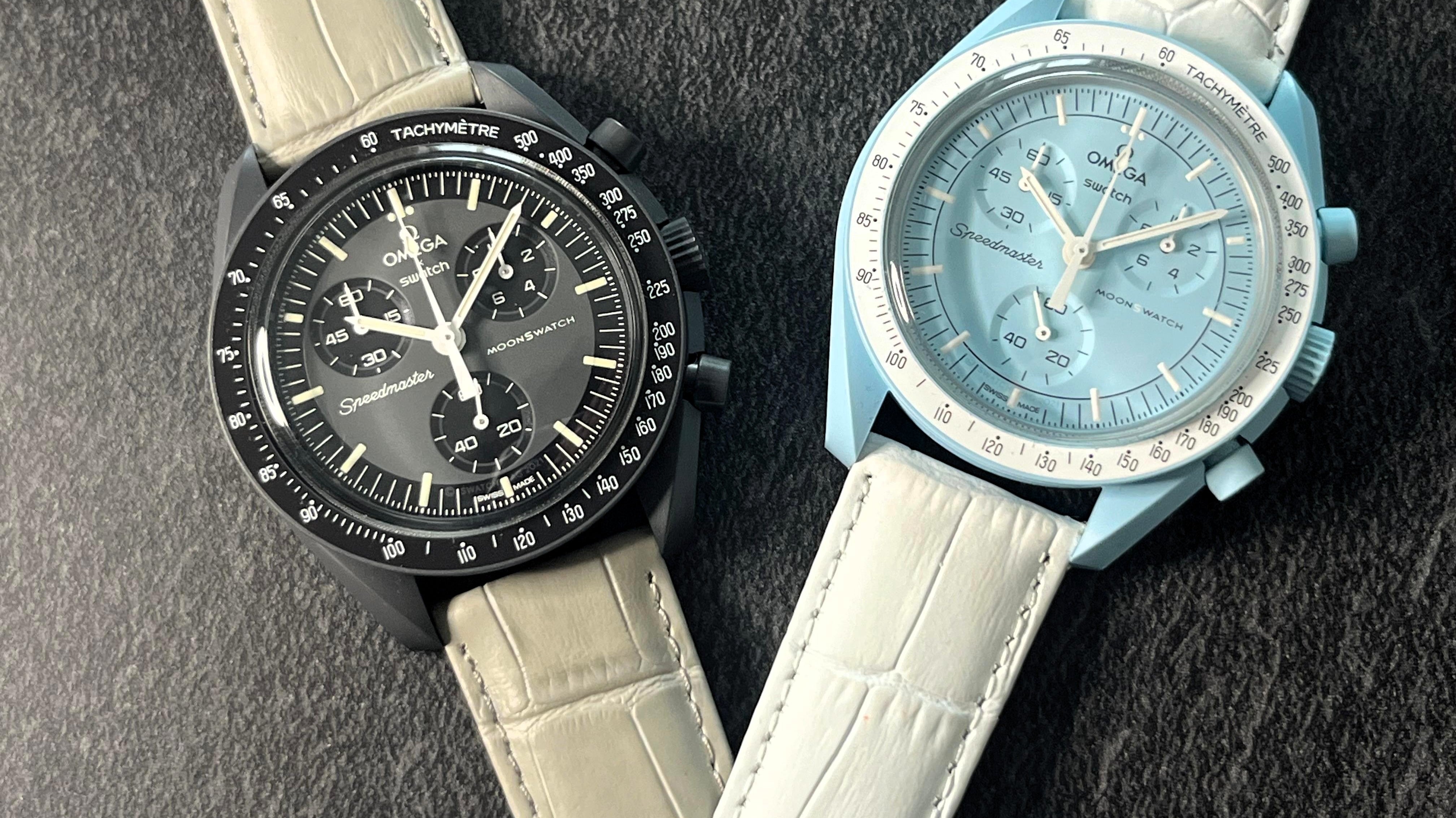
A chronograph is a special type of watch that, in addition to normal timekeeping, offers a stopwatch function. This function allows for precise measurement of time intervals, making it a versatile instrument for various applications. Chronographs are equipped with additional mechanisms that allow the wearer to start, stop, and reset the stopwatch hands using pushers. These pushers are often located on the side of the case, above and below the crown.
The different components of a chronograph watch include:
- Pusher: For starting, stopping and resetting the stopwatch function.
- Dials: Often several small dials (totalizers) that display the measured time intervals.
- Hands: Separate hands for seconds, minutes and hours of the stopwatch function.
Chronographs are available in various types , each with different drive systems and technologies. Mechanical chronographs are the traditional variety and are powered by a complex system of gears and springs. Quartz chronographs use a battery and a quartz crystal for timekeeping and often offer greater precision. Smartwatch chronographs combine digital technology with traditional chronograph functions, offering additional features such as fitness tracking and smartphone connectivity.
| type |
drive |
Characteristics |
|
Mechanical chronograph |
Manual or automatic movement |
Traditional craftsmanship, often with visible gears and springs |
|
Quartz chronograph |
Battery and quartz crystal |
High precision, lower maintenance, often more affordable |
|
Smartwatch chronograph |
Digital technology |
Combination of traditional chronograph functions and modern features such as fitness tracking and smartphone connectivity |
Objectively speaking, smartwatch chronographs offer the most features for your money . However, many watch enthusiasts swear by the craftsmanship and durability of mechanical chronographs.
The history of chronographs
Chronographs originated in Switzerland in the late 18th century. There, in 1776, watchmaker Jean Moïse Pouzait developed a watch with a second hand that could be stopped . However, the technology was nowhere near as advanced as it is today. The first officially recognized chronograph was built in 1816 by Louis Moinet—unusually not in Switzerland, but in France. A few years later, Nicolas Mathieu Rieussec commercialized the chronograph. Horse racing organizers, in particular, used them to stop time.
Over time, chronographs have become increasingly more precise and versatile . Famous models like the Omega Speedmaster and the Rolex Daytona have significantly shaped the history of watchmaking. The Omega Speedmaster, for example, achieved worldwide fame when it was the first watch worn on the moon in 1969.
Chronographs have also played a crucial role in the world of sports . Since the 1932 Olympic Games, where Omega first served as the Official Timekeeper, chronographs have been inextricably linked to precise timekeeping in sporting competitions.
Chronographs as collector's items and investments
Special chronographs are extremely valuable to collectors . They can be considered an investment. The collector value of a chronograph is influenced by several factors: the brand, the model, rarity, age, condition, and originality. Historical significance and famous wearers also increase the value. Models such as the Omega Speedmaster, the Rolex Daytona, and the TAG Heuer Monaco are particularly sought after by collectors.
When purchasing chronographs as an investment, you should pay close attention to authenticity and condition . Certificates and original packaging can significantly increase the resale value. Buy only from trusted dealers and only locally. Online purchases are often not very secure. Ideally, before purchasing, observe the price history of the watch of your choice over a longer period of time—the market value of chronographs can fluctuate.
When selling, the condition should be documented and presented transparently to potential buyers. Auctions and specialized platforms can be suitable sales outlets.

What are chronographs used for?
Chronographs are incredibly practical and, precisely for this reason, are still used in many areas . They are frequently used to measure time in sports, science, and everyday life. However, these days they are primarily purchased by watch enthusiasts who are interested in the mechanisms behind the various functions. Examples of such functions include the following:
|
Additional features |
Fields of application |
Mechanism behind the function |
Models that use the functions |
rarity |
|
Tachymeter |
Speed measurement |
Scale on the bezel for calculating speed |
Rolex Daytona, Omega Speedmaster |
Frequently |
|
Telemeter |
Distance measurement |
Measuring the time between light and sound events |
IWC Portuguese Chronograph, Longines Telemeter |
Rarely |
|
Flyback function |
Aviation, motorsport |
Instant restart of the stopwatch with one push |
Zenith El Primero, Blancpain Air Command |
Medium |
|
Pulsometer |
Medicine, Fitness |
Scale for measuring heart rate |
Longines pulsometer, TAG Heuer Carrera |
Rarely |
|
Regatta Timer |
Sailing regattas |
Countdown timer for regattas |
Rolex Yacht Master II, Omega Seamaster |
Medium |
|
Rattrapante (Split Seconds) |
Measuring intermediate times |
Second stop hand for intermediate times |
Patek Philippe Split-Seconds, IWC double chronograph |
Rarely |
Chronographs in everyday life
Chronographs are now sought after primarily by collectors or for their aesthetic appeal – after all, almost all of their functions are offered equally or even better by smartphones or smartwatches. Of course, you can still use your chronograph in everyday life. In sports, for example, they offer precise timekeeping, whether running, swimming, or cycling. Athletes use chronographs to track and improve their performance – without having to carry an intrusive smartphone with them. They are also valuable in the workplace, for example, for timing meetings or work phases.
Modern chronograph models are equipped with innovative functions and technologies . Smartwatch chronographs combine traditional stopwatch functions with modern features such as fitness tracking, GPS, and smartphone notifications.
In addition to their functionality, chronographs also have a distinctive style . They're not just tools, but also fashion accessories. Models like the TAG Heuer Connected or the Garmin MARQ Athlete offer numerous features and can be easily combined with almost any outfit.
What are the most popular chronograph brands?
Renowned watch manufacturers like Rolex and Omega have built some of the most famous chronograph models. The Daytona and the Speedmaster are arguably the two most famous chronographs of all time. However, there are other manufacturers and models you may not yet know:
|
brand |
Model |
Year of publication |
Functions |
Rarity value |
Additional information |
Approximate price |
|
Rolex |
Daytona |
1963 |
Tachymeter, stopwatch function |
High |
Famous by Paul Newman, iconic motorsport design |
From 13,000 € |
|
omega |
Speedmaster |
1957 |
Tachymeter, stopwatch function |
High |
First watch on the moon, worn by Apollo 11 |
From 4,500 € |
|
Breitling |
Navitimer |
1952 |
Stopwatch function, slide rule |
Medium |
Popular with pilots, versatile aviation instrument |
From 5,000 € |
|
Tag Heuer |
Monaco |
1969 |
Stopwatch function |
High |
Made famous by Steve McQueen in the film “Le Mans” |
From 4,000 € |
|
Zenith |
The First |
1969 |
High-frequency stopwatch function |
High |
First automatic chronograph, extremely precise |
From 6,000 € |
|
IWC |
Portuguese Chronograph |
1998 |
Stopwatch function |
Medium |
Elegant design inspired by marine chronometers |
From 7,000 € |
What should you look for when buying a chronograph?
First and foremost, your budget is of course crucial when purchasing a chronograph . Not everyone can afford a Rolex or an IWC—and that's perfectly fine, because even in lower price ranges, there are models that not only look beautiful and offer many features, but also promise a price increase.
Consider which features are important to you , such as a stopwatch, tachymeter, or heart rate monitor. Style also plays a big role, as the chronograph should suit your personal taste and the occasion. You also have the choice: mechanical vs. quartz watch .
It's best to buy chronographs from authorized dealers or reputable online platforms . Look for certificates and original packaging to avoid counterfeits. Check the serial number and compare details like weight and finish with originals. This way, you can be sure you're purchasing a high-quality model and not being ripped off.
Conclusion: Are chronographs worth the money?
Chronographs are still worth their money. If you're looking for an investment, there are many iconic and rare models that promise significant increases in value. If you're primarily looking for a functional model, you can get by with less money.
In the Happystrapy shop you will not only find suitable watch straps for chronographs from brands such as TAG Heuer or IWC, but also for numerous other brands.
FAQs
How does a chronograph work?
A chronograph has additional mechanisms that enable stopwatch functions. By pressing the pushers, you start, stop, and reset the stopwatch hand, which operates independently of the main movement. This allows you to measure time intervals precisely.
What distinguishes a chronograph from a normal watch?
In addition to the standard time display, a chronograph has additional stopwatch functions that allow for precise time interval measurement. Conventional watches don't offer this function and only display the current time.
Are chronographs more expensive than regular watches?
Chronographs are often more expensive than regular watches because they contain more complex mechanisms and additional functions. Their technical sophistication and precision justify the higher price.